The Knowledge LedgerThe Knowledge LedgerFollow on WhatsApp

A curated stream of high-signal insights across Technology, Healthcare, Lifesciences, AI, Oncology, Business, Entrepreneurship, Leadership, Philosophy and beyond.

Thoughtful, cross-disciplinary content designed to expand how you think, not just what you know.

No noise. Only substance.

Filtered by #philosophyClear filter
Jun 29, 2026·aeon.co

Poverty Is Manufactured, Not Inevitable

Poverty is often treated as a natural condition or a personal failing. In reality, it is largely a product of systemic exclusion, uncertainty, and structures that create vulnerability.

Anirudh Krishna and Dirk Philipsen argue that poverty is not simply the absence of money. It is a web of deprivations — lack of security, opportunity, agency, and dignity — shaped by policies, institutions, and historical processes of dispossession. Common myths (that poverty has always existed, that it's mainly about cash, or that it's self-inflicted) obscure its structural roots.

Jun 26, 2026·hbr.org

Great Leaders Question Philosophical Assumptions

Business leaders increasingly face decisions that are not just technical, financial, or operational — they are deeply philosophical. Questions about what a company fundamentally is, what counts as valid knowledge or evidence, and what is ethically right are becoming central to strategy and leadership.

Yet most executives have never been trained to surface and examine these hidden assumptions. In a world where old certainties are breaking down, treating decisions as purely practical problems can lead to blind spots, misaligned priorities, and unintended consequences.

Jun 13, 2026·wsj.com

Don't Get Too Comfortable

We’ve engineered a world that can eliminate discomfort almost instantly — and we’re surprised we feel less alive.

As AI removes friction from daily life, we risk eliminating the very challenges that keep us vital: effort, uncertainty, learning, and forward motion. Neuroscience shows that true vitality comes not from constant pleasure or stasis, but from progression— actively engaging with challenges that expand our future capacity, improve resilience, and even slow biological aging.

Jun 13, 2026·theatlantic.com

Philosophy Is Back in AI

As AI systems grow more powerful and autonomous, leading AI companies are increasingly hiring philosophers and ethicists to help navigate complex moral, conceptual, and alignment challenges.

Companies like Anthropic, OpenAI, and Google DeepMind are bringing in philosophers to work on ethical frameworks, model behavior, human-AI relationships, and even speculative questions around machine consciousness and “model welfare.” Anthropic, for example, trained its model Claude using an 84-page “constitution” grounded in ethical and philosophical principles.

Jun 10, 2026·substack.com

Discipline Enables Spontaneity

Most people treat discipline and spontaneity as opposites. Discipline feels like rigid structure and control. Spontaneity feels like freedom and flow. But the highest form of living requires both.

Discipline is what makes real spontaneity possible. Without it, spontaneity collapses into chaos and distraction. A jazz musician can improvise beautifully only because of thousands of hours spent mastering scales and rhythms. The same principle applies to creators, athletes, leaders, and entrepreneurs: apparent freedom is almost always built on a foundation of invisible structure.

Jun 7, 2026·theatlantic.com

The Ordinary Miracle of Existing

We are here. Against all odds.

The probability of any one of us existing — this exact combination of DNA, this moment in cosmic history, this fleeting window of consciousness — is so vanishingly small that it borders on the miraculous. Yet most of us move through our days as if existence were ordinary, even guaranteed.

Jun 6, 2026·substack.com

The Optimization Trap

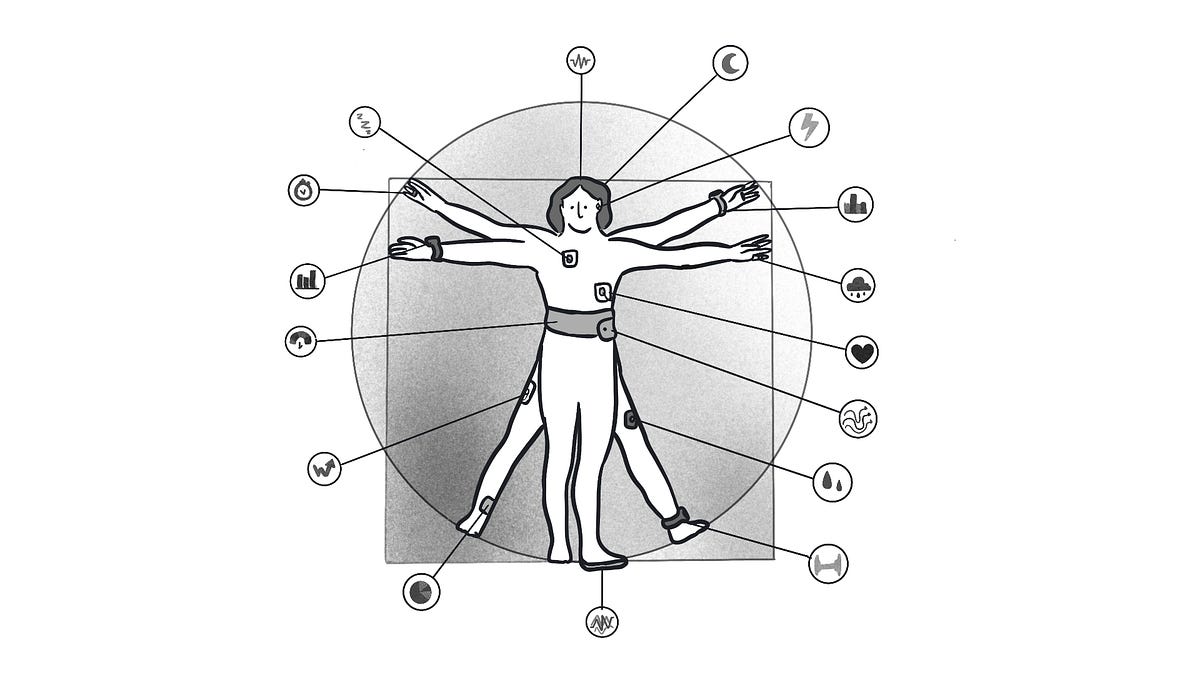
We are living in the golden age of self-optimization. Track your sleep, hit your macros, maximize your VO₂ max, read 50 books a year, cold plunge, red-light therapy, 5 a.m. wake-ups — the list is endless.

But according to Scott Galloway, this obsession with measurement and “maxxing” is not making us better. It’s making us more anxious, more perfectionistic, and less alive.

May 17, 2026·linkedin.com

Extended Liquid Minds

Cognition is no longer trapped inside your skull.

Extended Mind Theory long showed that notebooks, smartphones, and environments become active parts of thinking. AI now scales this to an entirely new level. Modern AI companions serve as real-time external cognitive layers that remember, reason, simulate scenarios, and adapt dynamically alongside you.

May 5, 2026·substack.com

The Intellectual Trap: Why Smart People Often Act Like Idiots

Highly intelligent people frequently get trapped by their own elegant mental models. They fall in love with beautiful theories and frameworks, prioritising intellectual coherence and elegance over messy real-world evidence and results.

This pattern repeats across domains. Behavioural scientists predictions on motivation performed worse than random chance. Trained therapists often do no better than casual conversations. Most hedge fund managers fail to beat the market. Even diversity training frequently increases bias instead of reducing it.