
After Work, We’ll Have Each Other
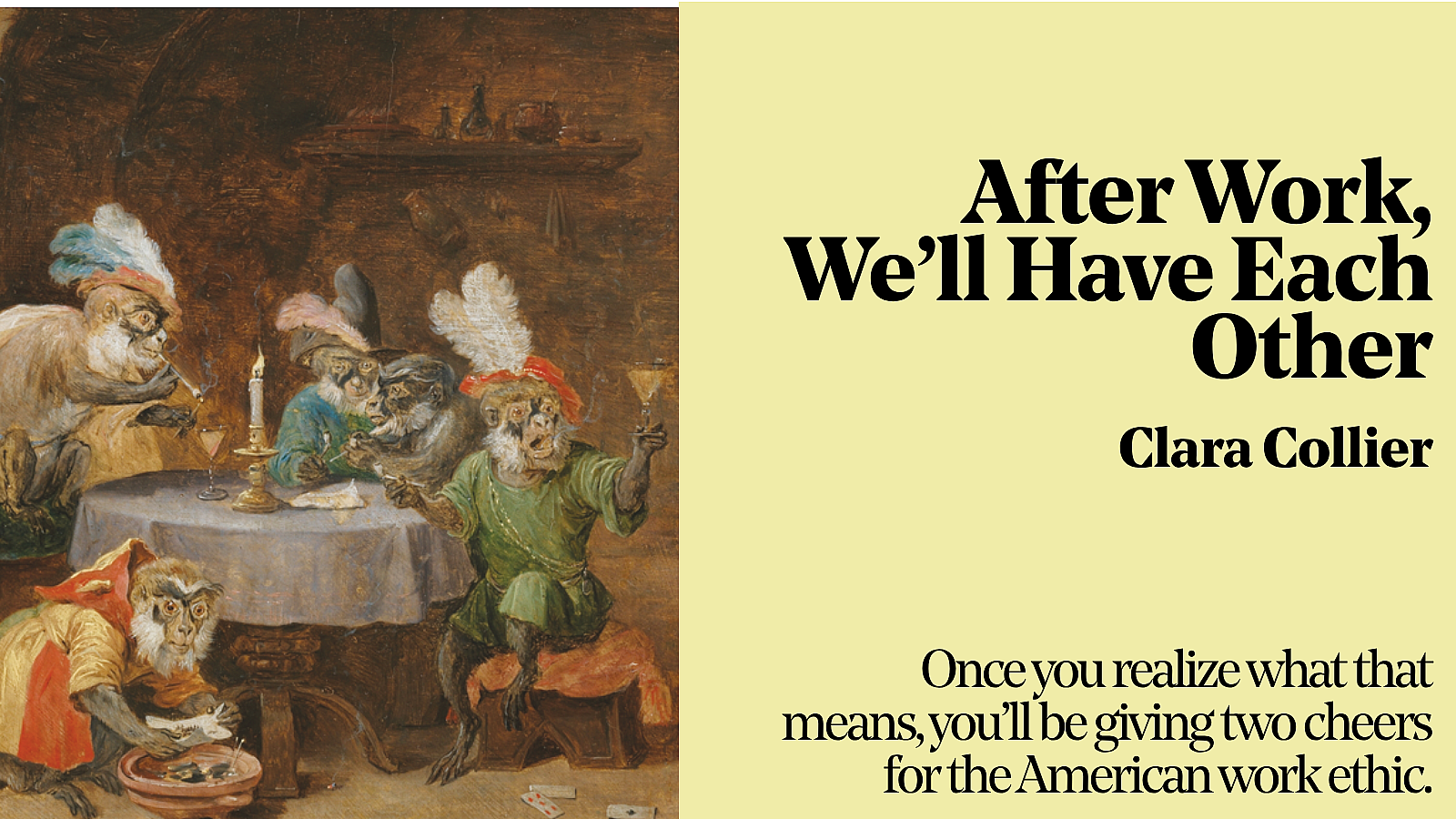
If machines take most economically necessary labour, relationships become the remaining source of structure and status. That is not automatically a kinder world. Pre-industrial life was relational: gossip, precedence, peer-group enforcement, and belonging that came with exclusion.
Look at people who already lived that way. Versailles courtiers. Upper-class volunteers on nonprofit boards. Working-class urban villagers whose jobs were precarious and whose real life was the peer group. Across class, the pattern is similar. Meaning came from each other. The world was small. Deviance was policed. Usefulness was often an illusion that kept the circle intact.
Work, for all its defects, offered something those worlds did not: impersonal respect. You could be valued for a skill by people who were not your kin, your faction, or your dinner companions. Commercial society made sympathy possible without clan membership. A post-work future that reverts to relational scarcity may restore warmth and also restore clannishness.
The claim is not that humans need jobs to be happy. Historical groups without dignified labour were often content. The claim is that they were content inside closed circles, and that the modern job was one of the few institutions that let strangers grant each other standing.
This Ledger Entry expands how the reader thinks by replacing the usual post-work leisure fantasy with a harder question: if we lose the impersonal dignity of work, which older social operating system comes back.