
The Knowledge LedgerThe Knowledge LedgerFollow on WhatsApp

A curated stream of high-signal insights across Technology, Healthcare, Lifesciences, AI, Oncology, Business, Entrepreneurship, Leadership, Philosophy and beyond.

Thoughtful, cross-disciplinary content designed to expand how you think, not just what you know.

No noise. Only substance.

Filtered by #healthcareClear filter
Jun 26, 2026Β·nature.com

Disparate Privacy Risks from Medical AI

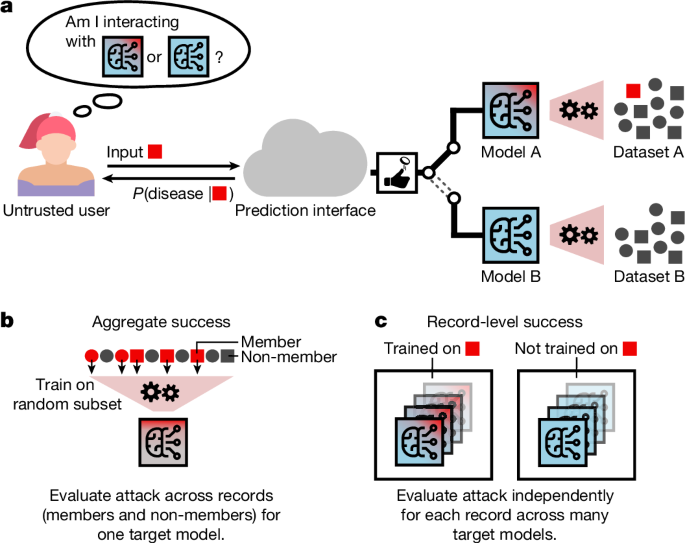
Medical AI models can leak sensitive patient information through privacy attacks, even when average risk metrics look acceptable. This paper shows that while aggregate membership inference attack success often appears close to random guessing, individual patient-level risks can be extremely highβ€” with some patients facing near-perfect identifiability.

The risks are also disparate: they disproportionately affect underrepresented groups (by race, disease prevalence, or insurance status). Larger models tend to increase these individual and group-level privacy vulnerabilities.

May 1, 2026Β·sciencedirect.com

Can LLMs Help Young Researchers Develop Clinical Research Ideas?

Early-career researchers in clinical fields face a major bottleneck. Generating truly novel and high-quality research hypotheses takes significant time and cognitive effort. This leaves less bandwidth for actually executing studies, running experiments, and translating ideas into published work.

This commentary explores whether large language models can meaningfully support junior researchers by helping them generate fresh clinical research ideas at scale.

Apr 26, 2026Β·substack.com

The Pharmacy Formula the World Can't Quit

India is the β€œPharmacy of the World”— not by accident, but by design.

The 1970 Patents Act flipped the script: instead of product patents (owning the molecule), India allowed process patents. Any company could legally manufacture the same drug using a different method β€” making patented medicines up to 99% cheaper.

Apr 19, 2026Β·arxiv.org

CoDaS: AI Co-Data-Scientist for Wearable Biomarkers

Google-led multi-agent AI system that acts like a full data-science team. It processes 9k+ participants and millions of hours of wearable signals (HR, sleep, steps, etc.) to discover clinically useful biomarkers.

The Iterative Loop (core engine): Profile data + ground in literature, Parallel statistical + ML exploration, Iterative refinement β€” GapChecker & Critic agents repeatedly test, critique, and strengthen candidates, Adversarial validation (Critic vs Defender).