
Oligodendrocytes and the Variance of Cognitive Decline
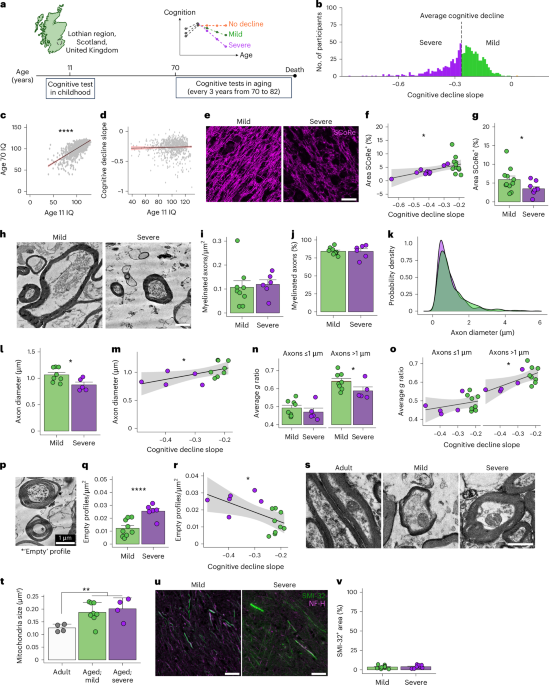
Why do some people experience steeper cognitive decline with age than others? This study links part of that variance to the brain’s myelin-forming cells.
Using longitudinal cognitive data, postmortem white-matter analysis, single-nucleus RNA sequencing, and a mouse model, the authors find that worse cognitive trajectories associate with smaller myelinated axon diameters, thicker myelin, and an accumulation of oligodendrocytes that downregulate the NRF2 pathway. The pathology is not simple myelin loss. It points toward dysfunctional excess myelination and impaired oxidative-stress responses in oligodendrocytes.
Oligodendrocyte-specific NRF2 knockout mice reproduce key features of the human white-matter changes and show attenuated cognitive improvement over time. The findings position the oligodendrocyte, and specifically the NRF2 pathway, as a contributor to age-related cognitive decline and as a potential therapeutic target.
This Ledger Entry expands how the reader thinks by moving the explanation of cognitive aging variance from a purely neuronal frame to one that includes the brain’s myelin-forming cells and their stress-response machinery.